Osaka, Kyoto, Nara, Hiroshima, Tokyo!
(Direct continuation from Part 1, where I boarded the Shinkasen train to Osaka)
—
A quick 2 hour train ride later, I arrived at Shin-Osaka. Another quick train away (super easy with Suica card!) was Umeda Station, and I looked there and at Osaka Station City for luggage storage lockers. Unfortunately, there were none left and I decided to quit my search and just drop my bags off at my accommodation. I stayed at Wafu Ryokan Uehonmachi, a small, traditional Japanese ryokan complete with a futon and tatami mats. It was also a 2-minute walk from Uehonmachi station, so I enjoyed a quick sweet treat there after dropping off my bags.
My first stop was Osaka Castle, which was much grander and picturesque compared to the Imperial Palace in Tokyo. I walked around the castle grounds before deciding to go inside, despite the scary-looking line. Luckily, the line moved fast (seems to be a theme) and I soon found myself inside the 8-story castle-turned-museum. The lower floors had historical artifacts from the reign of Toyotomi Hideyoshi in the 16th century. Fun fact, I got confused about the timeline of Japanese history, so I took a break on the 2nd floor to watch the famous history of japan YouTube video. I find myself only caring about the artifacts that are real and not replicas, but a lot of the artifacts were replicas, given the violent history of Osaka and Japan as a whole. It was an interesting experience, especially because I’d learned about Hideyoshi from the Korean perspective, which depicts him as a violent and destructive colonizer. Meanwhile, this castle depicted him as a charismatic ruler who preached unity across Japan.
The upper floors were hit or miss, and I found myself skimming the content until I made it to the 8th floor. The top floor was a lookout point over the castle grounds and Osaka as a whole. I took in the views, headed down, tried to watch the informational film (which did not have captions), and even saw street performers outside the castle (an acrobat and a young child playing the violin, the latter of which felt very on brand for Japan). I walked around the castle grounds and even visited the nearby Naniwa-no-miya ruins, which is where a palace stood in the 7th century as Japan’s capital. The ruins were really ruined because there was absolute nothing noteworthy in the park besides an old gazebo and some yellowed grass. It was cool to stand in the same site as the ancient Japanese capital from 1400 years ago, though.
A quick train ride away was Umeda Station. The mall attached to Osaka-Umeda station featured a section called Kiddie Land, and I had my eyes set on the Snoopy Shop. After emptying my wallet there, I took the short and scenic walk to Umeda Sky Tower. I waited in another long-but-fast-moving line to climb the elevator and then escalator to the top of this iconic building, consisting of 2 independent buildings connected at the top. I reached the top just before sunset and had a great time watching the dark orange hues envelop the city as the lights flickered on. The inside area had a mini restaurant, a screen showing a short anime, and information about the building and the architect’s eventual dream of a sky city (all skyscrapers in the city connected at the top). The outside area was a 360-degree viewing area of the city. After taking some long exposure shots of the trains and asking many strangers to take pictures of me, I headed down and walked to the station and took the Osaka Loop Line back towards the hostel.
After some frustrating delays, I officially checked in, dropped my stuff off, and immediately head back out towards the famous Dotonbori. Unfortunately, though, my Suica card had gotten messed up in my train transfers that day. It took me 30 minutes and a whole lot of walking to finally get it resolved, and by then it was too late to start a new adventure (similar to Tokyo, the trains stop at midnight). Defeated and utterly exhausted, I wandered around to find some non-convenience store food and ended up at Kitchen Bar Shiki. The only food option was some seafood pasta, but I knew the food was going to be good when I saw the chef smoke a cigarette while cooking. The pasta gave me just enough energy to walk back to the hostel, set up my futons, and crash.
I somehow managed to wake up the next morning at 6, wrap my heavily blistered feet, and be at the station at 7. Next stop: Kyoto! (after some McDonald’s breakfast, obviously). Instead of riding the expensive Shinkasen, I rode a standard JR train running on the super express schedule and got to Kyoto in 28 minutes. For just 800¥, it was definitely the right choice.
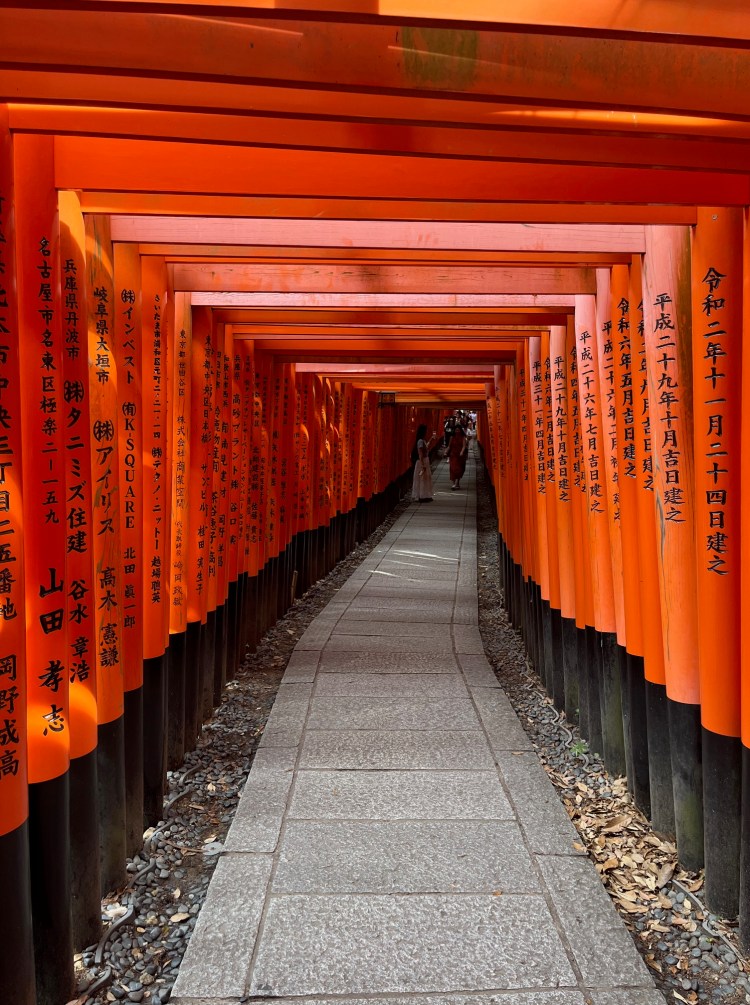
My reason for getting up early was to visit the Fushimi Inari Shrine as early as possible (ended up being around 8 AM) to avoid the big crowds. This shrine suffers from the Instagram effect, and I really cannot complain because I am also part of the problem. Luckily, though, the crowds at 8 AM were minimal and there were a lot of opportunities to photograph the beautiful, brightly-colored orange Torii gates without anyone in the walkway. As you move along the trail, the people tend to dissipate and very few actually climb the full route to the top, which was a great walk through all 10,000 Torii (theoretically), but didn’t have a summit view.
On the way up, there are lots of small shrines filled with idols and mini Torii that visitors have written their wishes on. Some of them even had small stores with snacks and knick-knacks, cared for by a single shopkeeper. On the way down, I saw a beautiful cat perched on one of the gates, sleeping peacefully with a view of Kyoto behind it. I wrapped up my hike by exploring the area around the main temple, which was like a village of shrines, complete with restaurants, shops, and dozens of small temples. I even bought a bracelet at one of the temples and the monk taking care of the temple let me feed his koi fish in the neighboring pond. Overall, it was a very unique experience and completely different than what I expected from the normal gates.
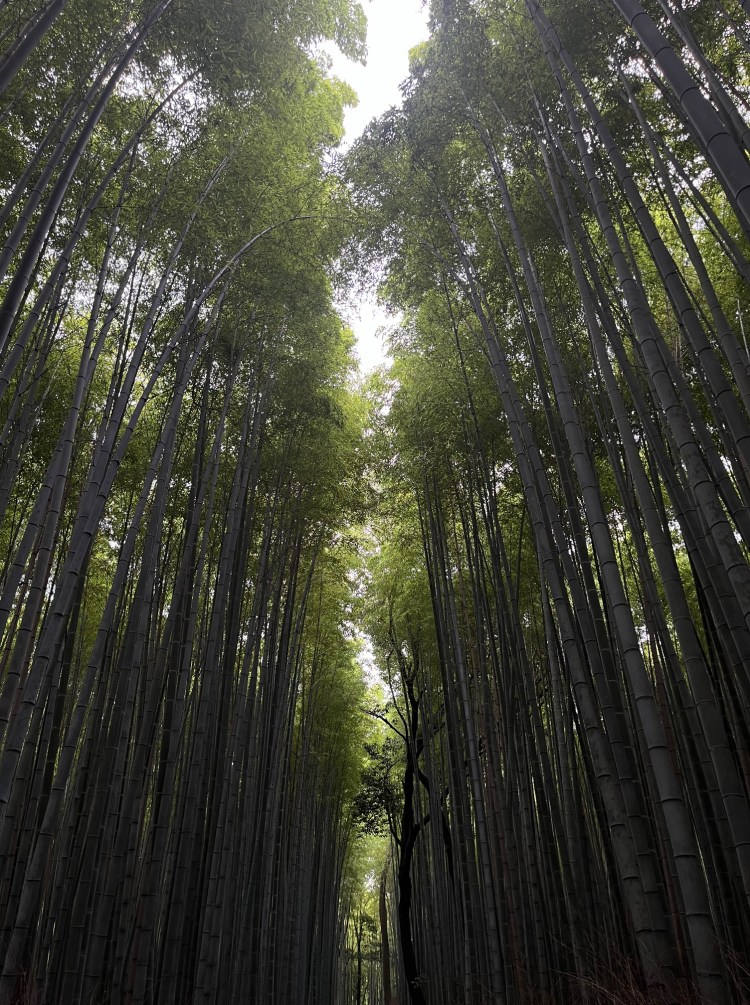
As a side note, I went back to the main entrance at around 10 AM, and the walkway was packed—impossible to get a clean shot. It was time to head across the town to Arashiyama Bamboo Forest, another Instagram-famous site (sensing a theme?). The trains were easy to navigate, but I was super tired when I got there. Luckily, there was a chili oil store with FREE samples outside the forest (called Ochanoko Saisai). Nothing, and I mean nothing, raises my spirits like chili oil. I had enough energy to continue through the forest. The tall, endless sticks of bamboo were cool, but I was a little underwhelmed to be honest.
I continued walking to the nearby Katsura River, skipped some rocks like a kid, and made a reservation at Yoshimura. This was a soba restaurant recommended by a friend, but it had about an hour and a half of wait time. So, what better way to kill the time than to visit Arashiyama Monkey park Iwatayama? It was a short walk away, but also quite the climb once inside. I didn’t realize that the monkeys were only at the top of the mountain, so I spent the hike up with my eyes peeled, fruitlessly looking for any movement. The top was a different story, though, with monkeys wandering around on the ground, eating from visitors’ hands, and jumping around the nearby lush landscape with deer and other creatures. It felt like a bit of a scam to pay for admission and food (apples or peanuts, but apples have a much higher success rate), especially after visiting India where the experience happens for free. Feeding them by hand was so worth it, though, and I felt so connected to them and their humanlike behaviors.
I had to leave after ~20 minutes, which was not enough to enjoy the monkeys and the gorgeous view of the Katsura River, but my reservation was waiting! I jogged down the steep slope and over Togetsukyo Bridge to reach Yoshimura just in time. It was delicious, and featured everything from cold soba, to warm soba in broth, and even to a tempura-rice bowl. Given the early start to the day, I was extremely tired and craving a nap, so I sat by the river and fought the urge to fall asleep. In the meantime, my friend from Penn, Kishen, was in town and exploring the bamboo forest. He was captivated by the forest, more so than I was, so I decided to meet up with him to give it a second chance. He had just gotten a camera from the vintage stores in Akihabara, and so we played around with some shots with our cameras in the bamboo forest and nearby pond and fields. The shots we took did increase my interest in the forest, but I still thought it was underwhelming and similar to what I would see in my hometown’s bamboo forest.
It was a lot of fun catching up with him and comparing travel notes, but we yapped so much that the nearby Tenryu-Ji temple had closed before we could get to it. We took some pictures from the outside, but this is definitely something saved for next time. Instead, we took the train to Yasaka Pagoda. This pagoda is a quintessential Kyoto location that is what many people first think of when imagining the city. We played around with our camera as the sun slowly set and the dull orange streetlights flickered on. We got lucky as there weren’t too many tourists, but it was still hard to get clean shots. Our next stop was Yasui-kompira-gu Shrine, a nearby odd-looking shrine consisting of what appears to be a hairy tunnel. The hairs are actually slips of paper with writing on them, and the tunnel is a small opening you crawl through to wish for love (or lack thereof, apparently). After dutifiully crawling through what I really hope was the right way, we visited the nearby Yasaka Shrine.
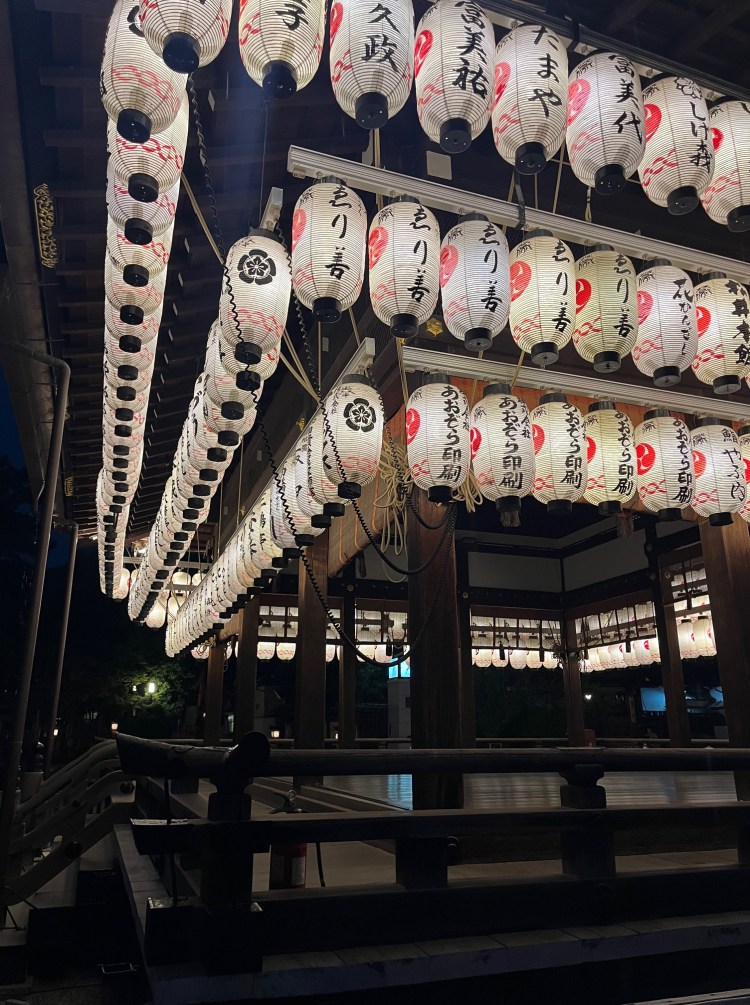
At this point, it had started to rain. The large lanterns at the shrine matched the rainy nighttime vibe perfectly and it truly felt like I was living in a lo-fi cover art scene. We took some more shots, but the rain was starting to pick up so we fled to Kishen’s hostel nearby. All the walking and cross-city adventures had us (especially me) absolutely exhausted, and some french fries helped replenish some energy. After some time to yap, we parted ways and I headed for Pontocho Alley. Along the way, I saw some sights to add to my Phoebe Bridgers Kyoto video, including a pay phone, arcade, and 7-11.
I finally reached, drenched from the rain. The alley itself had a brooding, mysterious vibe that I liked so much (especially with the Japanese street signs), but it was completely dead. I’m still not sure if it was the fact that it was a Monday, or that it was raining, but I didn’t have the energy to analyze the socioeconomic state of this alleyway, so I continued walking and crossed the Kamo River. I picked up some taiyaki and some refreshments from a konbini (Japanese convenience store) around the area and took the train back to Osaka. Upon arriving, I tried visiting a Matsunoya, a famous katsu chain in Japan. Unfortunately, the one I went to served only pork katsu (which I do not eat), so I instead had a fulfilling meal of a FamilyMart pancake sandwich (FamiChiki fried chicken in between two maple pancakes). I just made myself hungry writing about that must-try combination.
During my fries-filled dinner with Kishen, I realized I was close to breaking my all-time 1-day step record of around 43,900. So, after picking up my food, I took several laps around the block of my Ryokan until I hit 44,100 steps on the day. My feet were in absolute shambles, but it was so, so worth it. I rewarded myself with my pancake sandwich and fell asleep on my futon immediately.
Game 5 of the NBA finals was the next morning, and I did not have the same level of enthusiasm as I did for Games 1-4 in Taipei/Tokyo (+ I couldn’t figure out a venue to watch at). So, I stayed in bed and watched the score until it was clear the Mavericks were going to lose. It was a bittersweet moment, since losing was rough, but making it to the finals and getting to watch the NBA Finals in Japanese bars at 9 AM was a once-in-a-lifetime experience.
Once the score settled, I stumbled (not an exaggeration) out of bed, got to the station, and took the train to Nara. Again, don’t bother with the Shinkansen unless you’re in a big hurry. Nara is the famed “deer city” that I was super excited to visit and interact with all the deer that I had seen on social media.
After a quick train ride, I walked down Sanjo Dori street, which was filled with restaurants and shops, to Hashimotocho. I was looking for a stand there called Nakatanidou, where they famously pound mochi during public shows. Unfortunately, the stand was closed for personal reasons, so this will be a visit for the next trip. I met up with Kishen again and got some takoyaki with fries. I hadn’t had takoyaki (fried dough balls with octopus inside) in this region yet, which is what Osaka and its surrounding cities are known for, and this was REALLY good. The dish seems to be 90% dough 10% octopus, but I’m not complaining.
We walked East towards Kofuku-ji temple and started seeing deer walk alongside the road and construction around the temple. At first, seeing the deer side-by-side with crowded walkways and polluting construction equipment was a little bit sad. The deer looked sad and weren’t interested in the people at all. But, we continued walking further and further until we came across multiple wide-open greenspaces with deer wandering around. These deer were more active, and also much more interested in the food that tourists were giving them. Kishen and I bought some deer crackers from a nearby vendor, and were promptly attacked by them. I almost ran toward the nearby stores and the storekeeper panicked a little before telling me to run the other direction. The whole interaction really made me wonder why the deer don’t attack the stand with the treats…
We wandered around the green spaces for a while, even getting the some of the deer to bow to us in exchange for food. The deer, being raised in Japan, tend to bow as they have learned it as a polite behavior (and a behavior that often results in cracker treats). We took some shots of the deer on our cameras, especially of a nearby pond and of a mother and fawn. It was so surreal, especially alternating between scenes of tourists getting mobbed by packs of deer to another deer drinking water from a calm, quiet pond. Regardless, there were deer EVERYWHERE and I saw at least 200. Kishen left soon after, so I checked out Kofuku-ji Temple’s Central Golden Hall.
This temple was founded in the 8TH CENTURY(!) and features over 1300 years of history. The statues and artwork inside are centuries old, and it was shocking to me to see such old history. The US doesn’t have too many historical artifacts from over 300 years ago, especially life-size sculptures. It showcases how advanced East Asian society was, even 1000+ years ago. Aside from the age, though, the hall was a little underwhelming. Luckily, my next stop, the National Treasure Hall solved that feeling. The hall was beautifully constructed and added to the aura of the artifacts. Some of those statues were over 1400 years old and towered above me. I tried to put myself in the position of a 7th century Japanese farmer who lived in Nara and what it must have been like to see something like this.
I also noticed a lot of similarities to Hinduism, especially Karura, a divine being with a bird head, who reminded me of Garuda in Hinduism. I asked the museum guide, who spoke very limited English, but was happy to help me understand. Through Google translate and a LOT of patience, he taught me that Karura is simply a transliteration of Garuda and is based on the same being. It reminded me of the similarities between the Abrahamic religions, and how Eastern religions also share a bond.
After walking past some more deer, my next stop on the Temple Run (pun intended) was Todai-ji, known as the Great Buddha Hall. And man, does it live up to its name. As soon as you enter the inner door, a gigantic statue of Buddha greets you, with its palm facing you to bestow protection. The word “gigantic” doesn’t do it justice. Neither does colossal, humongous, or astronomical. The scale is mind-boggling, and I was smaller than the statue’s pinky finger. The temple also features a lot of gold ornamentation as you walk around the Buddha. I left right before sunset since it closed at 5:30 PM and started ascending the hills to the West to the temple.
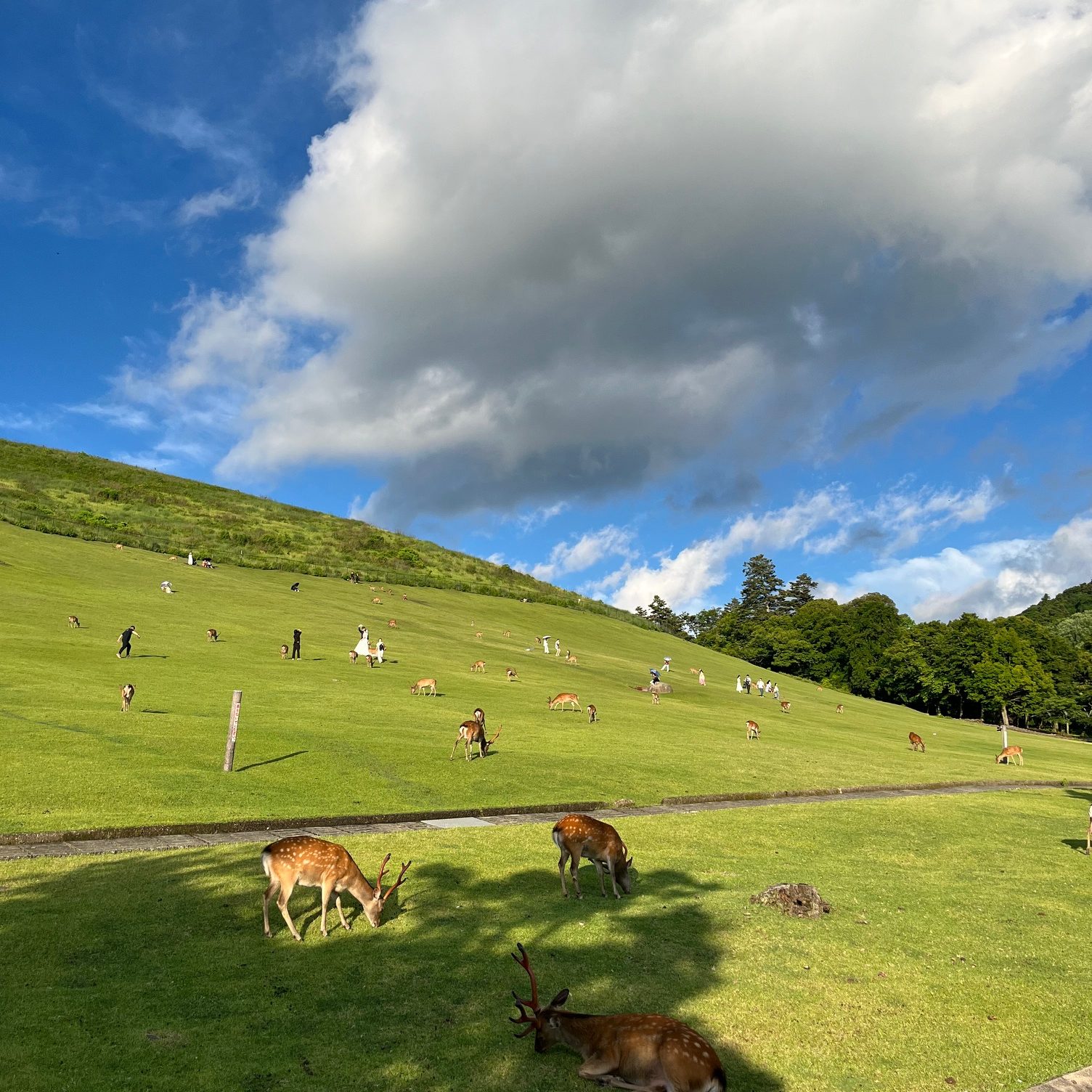
It was a quiet, forested area that eventually opened up to a small town and the entrance to Wakasuka Hill. This hill was jaw-droppingly gorgeous: deer grazing on the bright green grass on the steep hillside, people sitting on the hill and enjoying the view, and a cloud-dotted blue sky. I enjoyed the Studio Ghibli vibe of the area for a while, but after I realized that the gate to climb the hill had closed at 5PM, I decided to walk toward Kashuga Taisha. The walkway went through the woods and was lined with hundreds of bronze lanterns. These lanterns had grown moss and created a mysterious, ancient vibe as you approach the main Shinto shrine. The shrine itself was closed, but the lanterns was all I was there for.
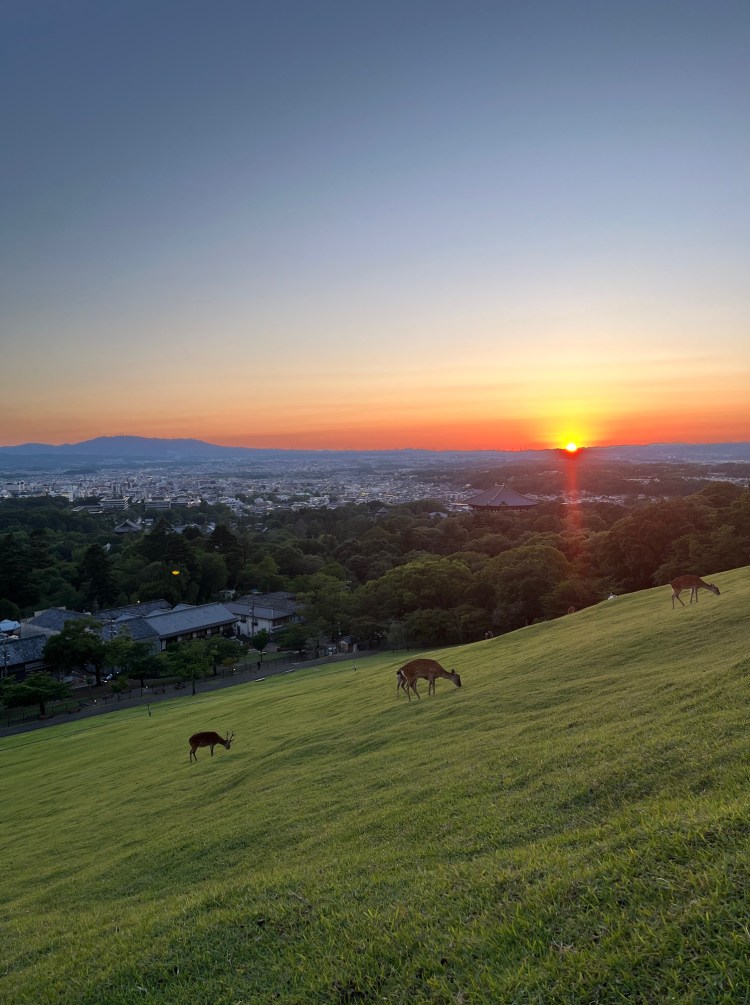
After visiting some local shops for knick-knacks and refreshment, I decided to go back to Wakasuka Hill and catch the sunset. Until that moment, I had taken a lot of care to follow the norms and regulations of regulations of Japan’s rule-focused society. But, once I saw some people scoot past the turnstile to get on the hill, I followed in their footsteps. I climbed up the hill and found a nice spot at the top to capture the deer, sunset, and the Nara skyline in a single scene. A couple was sitting next to me taking their wedding pictures, and even asked me to take pictures of them. I was so honored, and I hope they liked the results. As a side note, I found that carrying a camera around increased the likelihood of being asked to take pictures of people.
The sunset atop this hill from a Windows background was stunning. The sky slowly turned from blueish green to a soft orange, to a burning scarlet, and even a bright red before changing back to a purply blue and then navy. Nature is so beautiful, and with the palette of the sky combined with the green grass and deer wandering around me, I was sure I inside of a dream.
I was sure that this was not a dream and was indeed real life when I slipped on some water and fell on my ass when walking down the hill. My soaked pants definitely made for a silly sight during the 10-minute walk, 10-minute bus, and 30-minute train back to Osaka.
After a quick pants-change mission back at my ryokan, I took a short train to Dotonbori. The heavily-lit neon streets surrounding the river were a textbook cyberpunk vibe, but it felt like a smaller version of Shinjuku to me. I walked around and saw the main sights, like the Glico Man, and was impressed by the amount of foot traffic out and about on a Tuesday evening. I met up with Kishen again and Will (another Penn friend) and we wandered around for a while before parting ways. It was fun to hang with Kishen and see a familiar face from home during this month-long solo trek.
I spent the remainder of the night doing laps of the streets surrounding the river, getting some takoyaki (after a suprisingly long line), tanghulu (the fruit with a sugar shell), and some ice cream. This part of Osaka was cool, but it still felt like a watered down version of Tokyo. I guess I had just been incredibly spoiled by the wonders of the world’s biggest city, making it very hard to top. I ended the night spending way too long on the massage chair on the ground floor of my ryokan.
After one last night on my floor futon, I packed up the next morning and headed to the Shinkasen station via train. I picked up 2 bento boxes and a sandwich, which I inhaled them in 0.2 seconds on the train. In a couple hours, I reached Hiroshima, my last final stop on my Japan adventures. I stored my things at the station locker and caught a streetcar to the A-bomb dome. The streetcar system is incredibly easy to navigate, especially at the station. It took me a minute to figure out the payment by Suica, but you can always pay by cash too and the train attendants were all super helpful.
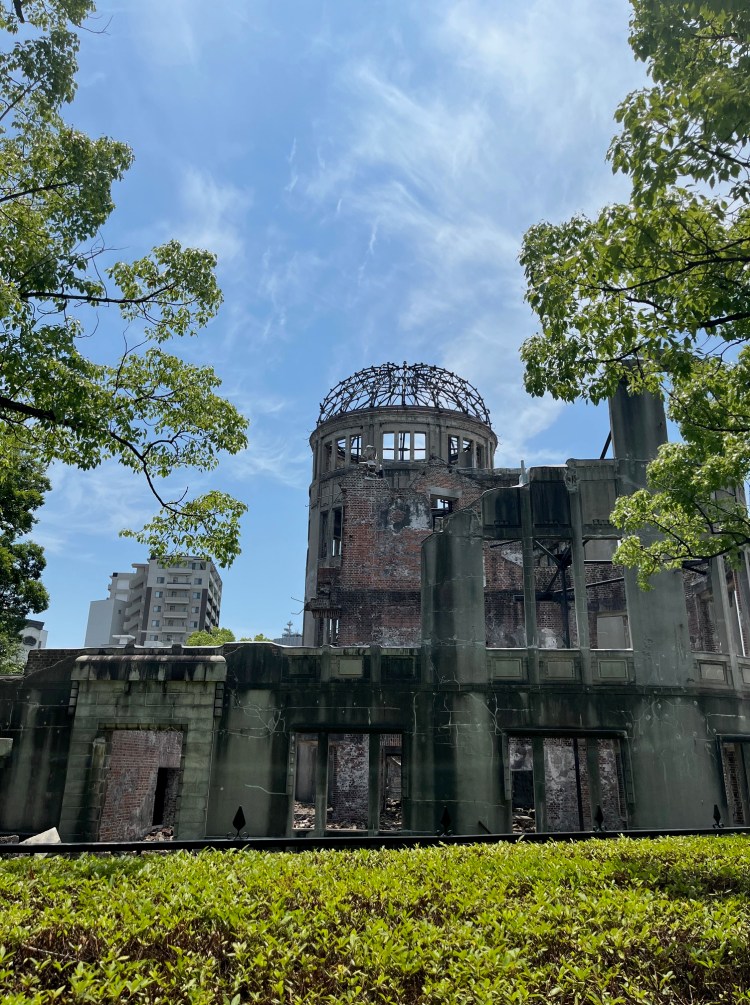
The A-bomb dome is a metallic frame of a dome atop the Hiroshima Prefectural Industrial Promotion Hall. It is the only structure that survived the atom bomb from extremely close range. Being there in-person really puts things into perspective; everything that you can see was completely flattened and turned to ash just 80 years ago. Now, it’s a beautiful park on the banks of a bustling city.
I continued exploring the different parts of the Peace Park, including the Children’s Memorial (with thousands of origami paper cranes in memoriam of Sadako Sasaki, a 12-year-old who died from leukemia from the radiation), the Eternal Flame, the Cenotaph containing the names of all the victims, and the National Peace Memorial Hall. The latter contained very heavy and reflective exhibits about the scale of the attack and a touching special exhibit about the Akatsuki Corps. These soldiers were training to go on suicide missions, but were called back early to tend to the fallout from the nuclear bomb. The perspective of these teenage soldiers through recorded interviews was very powerful.
After getting tickets to the main Peace Memorial Museum, I saw that there was a outdoor guided tour at 2 PM, so I joined along for that. The guided tour hit the same spots that I visited on my own, but also added on a nearby gravestone that was blown away by the bomb’s shockwave and the basement of the Rest House, which was completely destroyed in the bomb except for the basement, showing the effectiveness of underground bunkers in the event of nuclear attack. The tour ended at the exact site of the hypocenter, which is the spot where the atomic bomb exploded 600 meters in the air. I couldn’t wrap my mind around the fact that the air above me once reached 7000 degrees Celsius.
I returned back to the museum and traveled through all of the exhibits, making sure to pay attention to every victim’s story because I felt that everyone had so much to say. This was one of the only museums where I think I read every informational placard and viewed every piece of content. The exhibits were information-dense but also highlighted the stories of the victims across different time frames, from the immediate fallout, to the months of radiation sickness and poisoning, to the years of cancer afterwards. The stories of the children and parents were especially touching and hit hard. The ground floor exhibit highlighted the stories of young schoolchildren who were friends and faced tremendous loss after the bomb, even losing parents, best friends, siblings, and teachers. The museum was presented beautifully and it was just another reminder of the horrors of nuclear war. There was a heavy emphasis on denuclearization and disarmament, noting how there was a lot of progress from 1985-2010, but has stalled recently.
On the note of global alliances, I also visited the nearby G-7 building and saw where world leaders sat and discussed global policy. It was nice to see world leaders acknowledge the atrocity of the bombing, but felt a little shallow to be taken seriously.
I spent about 5 total hours at the peace park between all the sights and museums and was incredibly hungry. I decided to try Hiroshima-famous okonomiyaki, which is famous and slightly different from the traditional Osaka-style okonomiyaki. I found a place close-by that had a half-decent rating on Tabelog (the primary food review platform in Japan): Okonomiyaki Hanachan. Remember this name. I sat at the bar and ordered a green onion okonomiyaki without meat (but with egg) with some Asahi on the side. The restaurant is small and run by one woman, who was extremely polite and worked quickly on the grill facing the bar. She even gave training chopsticks to a family with young children after seeing them struggle.
The food. was. AMAZING. This dish of yakisoba noodles, cabbage, egg, savory pancake, green onion, sesame, mayo, and a darker teriyaki-style sauce was mind-blowing. Easily one of the best dishes of my entire life, and arguably the best of my life. I couldn’t stop smiling while eating because it was so good and hit the spot after hours of walking. They only took cash, so I had to withdraw from the nearby FamilyMart, but it was no issue and I made sure to communicate how much I enjoyed the meal.
My next stop was the downtown area for some shopping. Along the way, I passed a statue of Mahatma Gandhi, which is where I saw the only other Indian person in the city (he was proudly FaceTiming his family to show them the statue, beaming with joy). I soon arrived at Sunmall and paid a visit to the GU store, which I absolutely loved and bought several things. If I had the luggage space, I would have bought out the entire store in a heartbeat. I also visited Uniqlo in the same mall, but the store and mall closed soon after I got there.
Hiroshima is much smaller than the behemoths of Osaka and Tokyo, so I could easily walk to Hiroshima Castle. On the way, I passed by Motomachi skatepark, and the vibes of skating amongst the Japanese billboards skyscrapers were unmatched. I asked (more like gestured) them to take pictures using my camera and got their Instagram usernames to send to them later. I took some decent shots, but was too scared to use flash in case it threw them off. Their tricks were super sick, and I pondered becoming a full-time street photographer for a second. I even had the baggy jeans from GU now to dress the part.
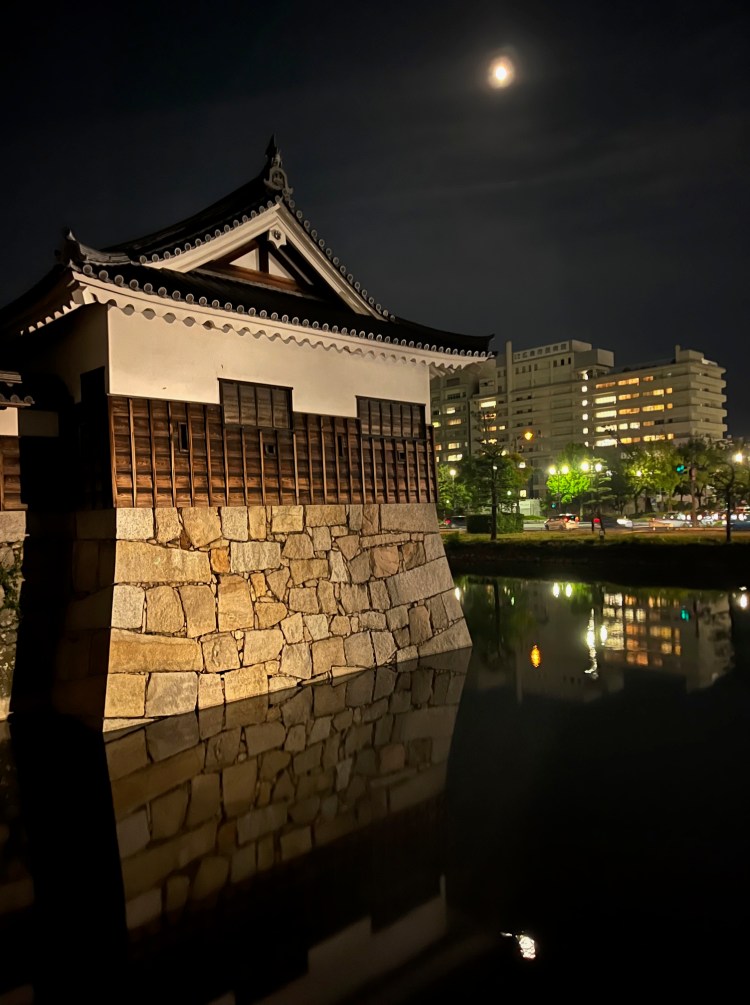
I continued to the castle, which was surrounded by a moat. Along the way, I entered an underground train station to cross the street and discovered a pianist playing in the middle of the quiet walkways. The acoustics of the station created a beautful, almost otherworldly sound. Once at the castle, I realized the main gate was open, so I apprehensively made my way inside. When I got near the Torii gate at the formal entrance, I saw someone with a red flashlight and got a little spooked. He was walking my way, so I quickly turned around and high-tailed it out of there. Being inside that area was probably allowed (considering it was wide open), but I was convinced I was going to get cursed by the Hiroshima Royal Family. I walked back into the city in hopes of finding the famous Pizza Vending Machine. I followed the Google Maps location, but couldn’t seem to find it. It was apparently nestled behind some other machines that I didn’t see, but I was so tired and still on a high from that okonomiyaki, so I was quick to give up.
Luckily, the nonexistent vending machine was close to Hatchobori and Hondori Streets: two famous shopping and food-centric streets. I briefly considered stopping, but I was craving some konbini food, so instead I took the streetcar to pick up my luggage and then another to get to my hotel. The hotel had a very vintage, 1980s-esque vibe to it and it overlooked the river. My room was designed for a maximum of 1 person, and was much smaller and cozier than a normal, American room. I thought it was a good solution to make rooms affordable and space-efficient. I picked up some food from the nearby 7-11 and ate it in the hotel robe while watching random Japanese TV, including a program teaching German to Japanese viewers.
After a restful night, I checked out, weighed my baggage using an old-school spring scale (1980s vibe!), headed to the main station, stored my luggage, and got a nutritional breakfast at Mister Donut. From there, it was a single train ride of about 40 minutes and a quick ferry to Miyajima. The ferry was packed with energetic school children who were asking us for our names to practice their English and bouncing around the boat. Upon arrival, I saw deer roaming freely around the island, similar to my experiences in Nara. As I walked farther into the island and towards the famous Itsukushima Shrine, the deer were replaced by a lot of tourists.
This shrine is home to one of the most famous Torii gate because it becomes partially submerged during the high tide, giving it the appearance of floating. It was high tide when I got there, so I took several pictures from the entry point into the shrine. The shrine itself was unqiue, consisting of orange wooden structures raised above the sand , but the main attraction was clearly the gate. There was even a queue to take pictures in front of it. Normally, I don’t wait in these lines, but I made an exception. Unfortunately, the pictures I got, taken by a well-meaning Indian dad, were not that great. Nevertheless, the journey continued to the Miyajima Ropeway. I had planned on walking the route, but I saw some people waiting for shuttle, and figured I’d wait the 5-10 minutes to take the shuttle up the incline (in hindsight, this was not necessary).
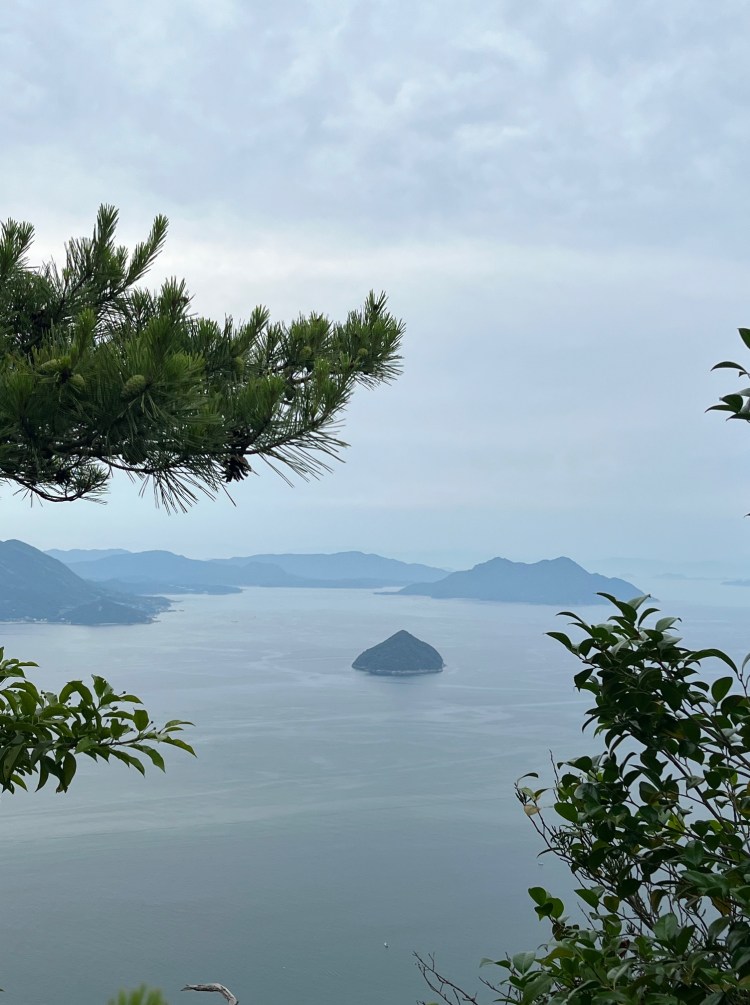
Two beautiful ropeway trips later, I reached Shishiiwa Observatory on Mount Misen. Instead of climbing up the Mount Misen’s summit point, I stayed around the observatory to enjoy the beautiful green islands and blue sea that surrounded Miyajima. The standard course to the summit takes ~1 hour and highlights several cultural sites, and I slightly regret not making time for it. I had a train to catch back to Tokyo, so my time was limited.
I was reminded of scenery from Wii Sports Resort from the views at the observatory, especially the golf islands that you could fly to during the Island Flyover game. Soon, it was time to take the ropeway down, especially since they were announcing that operations may be suspended if winds picked up. I descended the ropeway and walked towards the main shrine (even without the shuttle, it took 5-10 minutes of walking). Along the way, I heard loud, ethereal-sounding music that sounded like it came from the heavens, and I was convinced the rapture was happening.
After the rapture indeed did not happen, I reached the shrine during low tide and took several pictures at the base of the gate, which was now visible. The tide pools near the gate were teeming with sea life, from tiny crabs to mollusks. I decided I had some time to spare (or rather, I made time by changing my train reservation to a later one), so I explored the main shopping and food area of the island. There, I played a carnival-like shooting game with a BB gun and won some coca-cola candy, bought a frozen banana, and visited the famous Miyajima brewery for a flight and some fried oysters. I haven’t developed a palette for beer yet, but all of the options tasted great, especially the light-but-bitter ones.
The fried oysters are a delicacy on this island because of how fresh they area, and they were delicious. I love oysters, but I am spoiled though. The only two times I’ve had oysters were on the Croatian coast and on a Japanese island. My food tour continued on Omotesando street with a barbecued oyster, beautiful bracelets, and matcha shaved ice, all of which were excellent (to clarify, I did not eat the bracelets). Satisfied, I walked back to the ferry terminal, said goodbye to my deer friends, and took the ferry back to the mainland. Interestingly, Omotesando is the name of a Tokyo neighborhood, and I spent a long time pondering the relation.
You’d think my 5-course-meal would be enough for lunch, but by the time I made it back to the main station, I had worked up an apetite and helped myself to some egg salad and chicken sandwiches for the Shinkasen, along with some matcha cheese I got in Miyajima. The train back to Tokyo took about 4 hours, but with food and comfy chairs, the time flew by.
I arrived in Tokyo, made my way to Shibuya, and checked into my capsule hotel. As my last night in Japan, I had a couple items left on my checklist, so I was quick to get back out onto the streets. First, UNIQLO. The Uniqlo U cotton shirts were under 1000¥ (equivalent of 8$)! All that shopping worked up an appetite, so I set off to find places that served omurice, because that was a craving I had that wouldn’t be easily fixed elsewhere. It was late, though, and I was starving, so I wandered into the first place I could find, Ginza Lion, which is a chain. The food wasn’t anything special, but the efficiency of the ordering system was admirable. Clicking around on the tablet, I had my food and drink within minutes.
To end the night, I picked up some snacks and drinks (including one last Strong Zero) from FamilyMart and headed to MEGA Don Quijote. The sensory overload from the flourescent white lights and blaring slogans being played from the loudspeakers made it a perfect environment to pick up some last-minute snacks (specifically the baked cheesecake), chocolate, and even a watch and souvenirs. Donki really has it all.
I headed back to my capsule hotel, and fell asleep feeling like Lightning McQueen when he rode inside of Mack in Cars. I jammed my things into my suitcase and headed out in the morning. The journey to the airport consisted of walking to Shibuya Station, then taking the Ginza Line to Ueno, and transferring to the Skyliner to get to Narita.
Even though I left 3 hours early, the combination of the pouring rain and my miscalculation of how long the trip took, I was running late. So late, in fact, that I mentally accepted I was going to miss my flight. At Ueno, I figured out my next steps and enjoyed one last FamilyMart haul (consisting of a egg sando, matcha chocolate, and several random snacks + chips). On the skyliner, I called the airline, cancelled my ticket for a partial refund, and booked the next flight out. It was a little stressful, but I was very lucky that there were countless flights from Tokyo to Seoul for under 100$ ready to be booked. At the airport, I checked off the last item on my Japan checklist by having some refreshing Pocari Sweat.
And, just like that, my 2 weeks (and evidently, 11,000 words) in Japan were over. Onto the next! Sayonara!
Takeaways
- The culture and nature in Kyoto and especially Nara are world-class. 100000% worth spending several days here, and maybe spending less in Osaka (especially if you visit Tokyo)
- Some chili oil and shichimi can revive even the most wary of travelers. Or maybe just me
- Do NOT eat the okonomiyaki in Hiroshima. You will crave it for the rest of your life and there aren’t many great substitutes outside of Japan
- Visiting the atomic bomb sites in Hiroshima puts things into perspective. Global tragedies like this are so horrific and your school textbook will not do it justice.
- Japan outside of Tokyo is just as fascinating, if not more so, than Tokyo itself. The experiences I had in central and Southern Japan were genuinely life-changing




Rose-Bud-Thorn
Rose (what went well): Overall, the trip went very smoothly. Considering it was a 5-city excursion over the course of 6 days involving many forms of transit and accommodation, things could have easily gotten mixed up. Thanks to the efficiency of Japanese infrastructure and the stamina of my legs, I was able to do everything that was on my must-do list.
Bud (what was good but could be improved on): My transportation plan of Hiroshima-Tokyo to fly Tokyo-Seoul was very miscalculated. It burned a valuable day and was more expensive than valid alternatives like flying out of Osaka or Hiroshima or taking a ferry from Hiroshima/Fukuoka to Busan. I definitely do not recommend criss-crossing the country just to catch flights in Tokyo.
Thorn (what did not go well): Planning for only a single day in Kyoto was my worst mistake of the trip. The city is so amazing that even 44,000 steps did not do it justice, and I definitely would want 2-3 more days to explore the other sights and the food scene of Kyoto. Next time!





 Rohan Chhaya